Showing posts with label ENG 10. Show all posts

My Name

Today, after we read the next few chapters in The House on Mango Street, we are going to get started on a new prompt for our memoir projects. You will be writing about your own name, and what it means to you.

To get you started, here are a few online databases of name meanings and origins. Browse these sites for your name and see what they have to say. What does your name stand for? Is it a direct translation of a word? What nationality is it? Use the information you find to give you a starting point for this writing piece.

This link goes to a list of baby names and their meanings, but clicking on "More info" will give you lots of specific facts about the origin of your name, its translation(s) and its use throughout history!

Behindthename.com is a more adult-oriented name origin website, with some pretty comprehensive histories of names.

This site is a database of the meanings and origins of last names.


Have fun with these! See you in class,

-Mr. Thomas

Dia de los Muertos and Concrete Calaveras

Hi everyone,

Though we are still about twenty pages from the part of Trash that goes into detail about the holiday celebration of Dia de los Muertos, (the Day of the Dead) I wanted to take advantage of the fact that today is Poetry Friday! We are going to have an activity related to this significant portion of the book (which we will most likely end up reading as we complete this activity today, so it will all work out!)


So our characters are about to find themselves in the middle of a Latino celebration that takes place on November 2. Though it is not made clear in which country the events of the story are taking place, there are many countries which celebrate the Day of the Dead. For the purposes of our assignment, we'll stick with a loose interpretation of the traditions that the characters in the book follow on this day. 

The Day of the Dead is a holiday season which is set aside to honor family members or other loved ones who have passed away. The celebrations often take place at the very graves of the honored dead, and there are traditionally all manner of offerings and poems/prayers laid down to honor their memories and spirits.

In keeping with our penchant for integrating artwork with our poetry, we are going to make calaveras (decorated skulls) and conjure poems that are either based on characters in our story, or written for loved ones we've lost. 


You see, one type of offering brought to the graves by the families of the deceased is any variation on a calavera, a decorated skull that can be made out of anything from paper to lumps of painted sugar. These can be accompanied by poems as well--poems that are meant to convince the spirit of the dead to come back to the world of the living! 

To make our own poems, we need to consider who we want them written to. An interesting part of writing a calavera is that it can be addressed both to someone who is still alive or someone who has died. If you want, you can write a poem for someone in your family or a character in the story. If you choose the latter, you may need to mention things about the life of that character that you either mourn or appreciate.


Once the poems are written (instructions & details to follow) we will turn them into concrete poems in the shape of skulls, and do our decorating in and around the poems. It will be interesting to see whether or not anyone tries to make their calavera look like the character their poem is addressed to!

-Mr. Thomas

Personal Belief Activity

Hi Everybody,

As we near the end of the third quarter, we're going to take a step back and take a look at some human rights issues we've discussed while reading Trash. 


Today we are going to have an in-class activity which will let us voice some of the opinions that I know all of you have. As we've read this book, we've encountered and discussed a variety of humanitarian disasters that are taking place all around the world: Corrupt law enforcement, child imprisonment, dumpsite children, shattered family structures, etc. During each discussion, it was easy to see that you all feel very strongly about each of these issues.

So in class we are going to each consider one of these issues by writing beliefs up on posters labeled:
     Corrupt Law Enforcement
     Child Imprisonment
     Dumpsite Children/Shattered Families

We are then going to write a personal belief statement which explains how we feel about one of these issues. After this part of the activity, we will visit a separate poster labeled, Why? where we will consider the reasons these things are happening. After we've had a discussion about the many different elements that build up to these situations, we will revisit our statement. Has it changed since you've considered some of the reasons we've come up with?

-Mr. Thomas

Child Imprisonment (continued)

Hello Sophomores,

Today we are going to learn some more about child imprisonment.

As we've read Andy Mulligan's Trash, we've gradually seen more of the country that exists beyond Behala and the Smoky Mountain dump site. Now we will get up-close and personal with the nation's prison system. In our reading, a few of the characters are brought into the heart of a prison that is overcrowded with children and adults alike. We have already focused on the corruption of law enforcement in this book, but it is important that we become more informed about the extent of the problems of the judicial system.


The following is a slideshow of photos that a journalist took while visiting Cambodia. The journalist was working with a volunteer organization that provides help for children whose families have been destroyed by imprisonment or who have been imprisoned themselves:


We are going to watch this slideshow in class and have some discussion about the living conditions and the failings of the judicial system in Cambodia. The video will serve as a way to move the discussion in the right place, so that we can look at this testimonial from an imprisoned Cambodian woman who was forced to bring her child into prison with her, during much of her 16 year sentence. 


The link accesses a PDF of this woman's testimony, which we will look at in some detail in class. We will be linking the information we have learned with an activity as well. 

-Mr. Thomas

Child Imprisonment

Hello Sophomores,

Today, though we only have you for the first 30 minutes of class, we are going to get familiar with the problem of the imprisonment and abuse of children in other countries. We touched base on this during our early release class by reading through a summarized report by Human Rights Watch and highlighted and discussed some important facts.

Now we are going to look at some first-hand testimonies from children imprisoned in Cambodia, not in words, but in pictures. These pictures were collected as part of an art exhibit called "Children in Prison--No Place to Grow Up."


http://www.noedhjaelp.dk/extra/flash/slideshow/2008-cambodia-childreninprison/

Your assignment will be to make one of these pictures, from the point of view of any of the characters you have read about this year. Here is a list of things you have read in case you need to be reminded:

Night
Amnesty International Short Stories:
     "Prisoner of Conscience"
     "Forced Arranged Marriage"
     "Child Slave Labor"

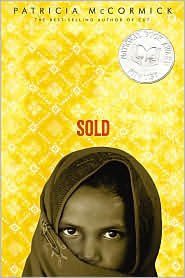
Sold
Trash


In addition to this picture, you are going to write a list poem (I will give you the format in class) that takes into account the rights that these characters have lost. In four stanzas, you will be arguing for these characters and their rights, explaining what they should be allowed to do as children, and what should not be happening to them as children.


-Mr. Thomas

Introduction to "Trash" by Andy Mulligan

Hello Sophomores!

It's time to start our next book, and what better way to celebrate than to start with a new teacher? Mrs. Deraps is going to let me take the lead as we start reading Trash by Andy Mulligan, and with your help, I hope to make it a memorable (and, of course, educational) experience for all of us!


Trash is the story of a group of children in a third-world country who live on an extremely large dumpsite,  sifting through heaps of trash every day of their lives, searching for valuable materials that they can sell or trade to help their families. Places like the dumpsite in the story are all too real, however, and as this short documentary about a garbage dump in Cambodia shows us, there are untold numbers of sick and injured children who are abandoned or orphaned at a young age, forced to live amid the filth of city dumps for their entire lives.


Small Steps: Cambodia, Phnom Penh from Amy Hanson on Vimeo.


As we are watching this video, be thinking about some of the things you are learning and what can be done to help people in this situation. Part of the viewing guide requires that you ask two questions. You will be given a viewing guide to help you organize your thoughts, but be prepared to have a discussion over this video in class.

Also feel free to draw connections between Sold and Trash, including the danger of the character's lifestyles and their ability(or inability) to leave their locations. After the introductory video and a little discussion, we'll dig in and start reading!

Have a happy Valentine's day!
-Mr. Thomas

Lost in Translation: A Poem in Nepali

 In Patricia McCormick's Sold, the main character, Lakshmi, learns to speak and understand a few key phrases in English.  It is this knowledge that helps her to escape from her life as a sex slave in India. For today's poem, we are going to incorporate some phrases in Lakshmi's native Nepali with those in English.

Basically, the vision of this poem is that it could serve as a little message from Lakshmi to someone who could help her. Using basic Nepali language, write an 11 line poem where Lakshmi tells the reader that she's in danger and that she needs help.

Format:

Line #1: Nepali phrase
Line #2: English translation of the Nepali phrase

Line #3: Nepali phrase
Line #4: English translation of the Nepali phrase

Line #5: Nepali phrase
Line #6: English translation of the Nepali phrase

Line #7: Nepali phrase
Line #8: English translation of the Nepali phrase

Line #9: Nepali phrase
Line #10: English translation of the Nepali phrase

Line #11: Line in English (What she really wants to say but can't with her limited understanding of English)

Please type your poem in a Pages document and send it to me this period. I will be conferencing with you over your Words, Words, Words common assessment papers during this time.

Hinduism: What Is It?


In our book, Sold, by Patricia McCormick, the main character believes in the Hindu religion. Many of us in this classroom may be unfamiliar with this ancient religion, because it is not often that you come across someone with this religious belief system where we live.

Today, we're going to work to create a deeper understanding of this religion. You'll:

Find information about the Hindu Religion. Choose three categories from this page to find facts about.

Choose a God or Goddess to find information and an image to include in your post.

Choose two important/ interesting aspects of this to share out with the class.

Poetry Friday: Sex Trafficking Here and There


This week, we started reading Patricia McCormick's novel in verse Sold.  In this book, a Nepalese teen girl is sold into sexual slavery. Though this may be a lesser problem in the United States, there are certainly young women and girls who become or are kept as prostitutes against their will. We listened to two news reports from National Public Radio's "All Things Considered" this week to learn more about what's happening in our country where teen prostitution is concerned.

We listened to one segment called "Trafficked Teen Girls Describe Life in 'The Game'" and one called "Arresting Youth in Sex Trafficking Raises Debate" to learn more about this issue in our country.

For today's Poetry Friday lesson, you're going to write a poem that contrasts the sex trade in our country with other countries like Nepal.

Bloggers Unite for World AIDS Day

 Tomorrow, December 1st is World AIDS Day. Across the globe, bloggers, activists, and victims of the AIDS pandemic are uniting to raise awareness about AIDS. We are going to join this effort by adding our blog posts to the mix. For today's assignment, you are going to:

Locate 5-7 facts about AIDS from these articles/ sites:

World AIDS Campaign

5 Ways to Get Involved on World AIDS Day

NAT: UK AIDS Organization

Post your facts on your blog with a World AIDS Day Button

Create a poster to support World AIDS Day

Here's mine:

See some samples from others around the world.

And, finally. Let's show our support with some red ribbons. I have one for each of you if you'd like to wear it! You can wear it all week long if you choose.

Do Words Have the Power to Set Us Free?

Last class, we talked a little about the power of words when they are used against people who are of different sexual orientations. Though we just touched on this issue, you all seemed to have some sense that words carry a lot of weight, especially when they are directed at a person in a hateful manner.

Amnesty International has been working to free citizens who are prisoners of conscience. A prisoner of conscience, which we've talked about in previous classes, is someone who is jailed for expressing their beliefs in a non-violent manner. Recently, international attention has been called to one such prisoner of conscience. His name is Liu Xiaobo and he is charged by the Chinese government with "inciting subversion of state power" and given an 11-year prison sentence on December 25, 2009 simply for co-authoring a proposal for political and legal reform in China.

Even though this man has won the Nobel Peace Prize for his efforts, he is still being held prisoner in China. Today, we're going to add our voices to the international outcry concerning this man and his plight. You will:

Send a prefabricated letter about this case to the Chinese government from the Amnesty International site.

Choose one other case to send a letter about. Please take a few notes on stickies to share with the class.  Please send me your stickies in an email for credit. Be sure to include the following information about the person or group of people:

-Their Name/ Cause:
-Country:
-Time incarcerated:
-Reason for incarceration:

Here is a video from Amnesty International about the power of words:

Honoring Our Nation's Veterans

Tomorrow is Veteran's Day in the United States. Our observance of this important day comes on the heels of the death of a Maine soldier, Spc. Andrew Hutchins, who was killed in Afghanistan on Monday. The proximity of these two events makes me wonder how you all feel about war. You were probably fairly young when the United States entered Iraq. So, you have grown up with war in the background (or forefront for some of you) of your lives. Your perspective is unique, as you are the first generation since those who grew up during the Vietnam War to see and hear about war for most of your childhood.

We talked last week about pacifists and conscientious objectors. Most of you did not know of these terms, but in our short story "Klaus Vogel and the Bad Lads," a man is persecuted by his community for being a conscientious objector, or a "conchie". This story by David Almond highlights the stigma that can come from deciding to not participate in war.

So, what do you believe?

Today, you're going to suss out your beliefs on war. This is a huge topic, but there are plenty of threads to choose from in your exploration of your beliefs and opinions. You're going to select two strains or topics to research in today's class and you'll write one or two blog posts about the topics you choose. (Some may be combined into one post.) Here is the list to choose from:

The organization called Veterans for Peace: Who are they? What is their mission? What are two interesting facts from their website? (Make sure to link back to their site in your post!)

An obituary for Spc. Andrew Hutchins. What was he like? Where was he from? How old was he? (Make sure to link back to this site in your post!)

The organization called Iraq Veterans Against the War. Who are they? What is their mission? What are two interesting facts from their website? (Make sure to link back to their site in your post!)

The history of Veteran's Day. How did this holiday come to be? Who created it? When?  What is the purpose of it?

React to the poster for Veteran's Day 2010. How does it make you feel? Do you recognize all of the names/ locations on the list for this poster? Also, which poster was created the year you were born? How do you feel about that poster? What are the differences between the 2010 poster and the one from your birth year?

Look up the definition of the terms "pacifist" and "conscientious objector." Do you consider yourself to be a pacifist or CO? Why or why not?

SSR Survey Quarter One

Please take this short survey so that I can collect data about this quarter's SSR.

Elections World Wide

Today is the day that voting occurs across our country. In our state, we are deciding which candidate we will elect as our next governor. We vote every year at this time, and the issues and candidates change based on a sort of cyclical pattern. Some of our citizens choose to take part in this process, but others elect not to. Either way, this is a choice that we make as people living in a democracy.

In other countries, these rights are not given fully and equally to citizens. In some countries, the people have gone more than two decades without ever casting a single vote. In other countries, people are intimidated into not voting. Today, we're going to read about one such country. It's called Myanmar, and there are serious human rights abuses happening in this country.

Here's what we're going to do today:

Choose five words from today's reading that stand out to you as important/ powerful/ necessary to describe this article.

On your blog, write your summary of this article using your five words.

Then, write about your feelings on the right to vote. Do you plan to vote once you're 18? Do you think that you would value this right more if it were taken away? Do you feel as though it's important to engage in civic responsibilities as an American?

Once you're done posting, add in a picture if you have time. Please email me a link to your post.

Universal Declaration of Human Rights: Creating the Pic List

We started our year with a vivid and horrifying account of the Jewish Holocaust. Through the eyes of one survivor, we saw and experienced some of the worst violations of human rights. Ever.

This year, we're going to study something called the Universal Declaration of Human Rights. This document was created in 1948, which is just after the end of WWII. This document serves as a guideline for how all countries should treat their citizens. Most of these rights are obvious to us as Americans, but it is important to recognize that all are violated daily, if not hourly. Not everyone has the right to speak, marry, or live as they see fit. Not everyone has a voice. But, this document seeks to give those (and more) freedoms to all. A Universal Declaration of Human Rights.

Today, you are going to take two of the thirty articles in this document and create a compelling vision of what it represents. You will do this by:

-Finding the two articles assigned to you at this home site
-Choosing one word from your first article that seems powerful or important
-Typing that one word into this site
-Choosing an image that you feel represents the intent of your article
-Dragging the image into Pages and inserting BOTH the article EXACTLY AS IT'S WRITTEN and the number of the article
-Taking a screenshot and sending it to me
-Uploading your final product onto your blog page

And then, repeat for your second article.

After these are finished, we're going to print them in color and hang them in our classroom. We're also going to hang some around the school. December 10th is Human Rights Day. We're going to be celebrating this event school-wide during the week of December 10th, so these posters will help to prepare the psyches of our school population to understand more about this document. 

Here is a sample of what I'm looking for you to create:


Belief Statements: The Personal Creed Project

Since we started this school year, we've been working to collect belief statements inspired by our readings and the actual and fictional people we've met along the way. So far, we've had eight belief statements this year. You have been writing them on post-its most every class. Here are the topics we've addressed thus far in our statements:

1. Do you believe in God or some sort of higher power?

2. Do you believe that some people have supernatural powers? As in, psychic abilities or powers?

3. Are you an optimist or a pessimist?

4. Are you a person who forgives those who have harmed you or do you believe that there are some wrongs  that should not be forgiven?

5. How do you feel about the word "hate"? Are you someone who uses it all of the time, or do you feel like it carries weight and should be used sparingly?

6. What is your understanding of the freedom of speech? Do you think that it should apply to everyone or have some restrictions?

7. Do you believe that governments should be allowed to torture those who they're trying to gain information from?

8. Do you feel that funerals are a celebration of life or a time to mourn death?

All of these prompts are related to the events, situations, and questions raised in Elie Wiesel's Holocaust memoir Night. We will continue to collect belief statements as we read this text and others this school year. At the end of the year, we will use these statements and other pieces to create our Personal Creed Project.

Night: Hangings and Torture

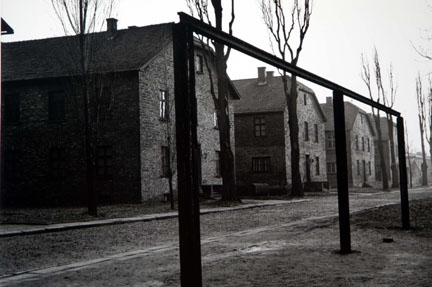
Gallows at Auschwitz

When we first completed our Book Walk of Elie Wiesel's Night, several of you commented on the painting of three hanging bodies on the back cover. Throughout our reading, you all have turned back to that piece of art and remarked on it. Today, we read about the story behind this work of art.

We started class with a fact about Zyklon B, the insecticide used to kill thousands (millions, more like) of people at Auschwitz and other concentration camps. Though Zyklon B was transported in crystal form, it produced a deadly gas when heated. The Nazis piped it into "shower" rooms and used it to murder many, many people, including Wiesel's mother and youngest sister.

As you all know, the gas chambers were not the only way that the Nazis murdered the Jews.  There was the starvation and the torture of these innocent people, but also hangings. Wiesel mentions that he witnessed several hangings at Auschwitz. Thinking about these hangings led us to talking about the use of torture against prisoners and POWs.

Our belief statement of the day (which will be added to your Personal Creed Projects) is about whether or not you believe that torture should be used on prisoners. Some of you thought that it has no place in our prisons, while others of you felt that there are certain cases where torture is an appropriate course of action to gain essential information from prisoners.

Holocaust Photo Story


Today, you're going to choose a photo taken during WWII and create a story to go with it. You can either:

-Choose one person from the photo and talk about what's happening from their point of view

Or

-Choose to write about the scene from the point of view of the person taking the photo

Please use this site for your photo search.

Poetry Friday: "The Little Boy WIth His Hands Up"

As we talked about in class today, WWII is one of the first wars to have huge amounts of photo documentation to show the horrors and realities that the victims of the Holocaust experienced. There are hundreds (possibly thousands of images) that survived this war, even if the people in them did not.

Today, we looked at one of the most powerful images that I've ever seen. It's of a little boy who seems to have been separated from his family during the evacuation of a Jewish ghetto. We looked at this image in class and had a discussion about how this boy must have felt as the picture was taken. Here is the photo:
And then we read Yala Korwin's poem titled "The Little Boy With His Hands Up."  As I read this poem aloud, you all circled words/ phrases that stood out to you as powerful or important. Additionally, you all combed this poem for lines and imaged that relate to our current read, Night.We collected all of your words and observations on the board and had a wonderful discussion about this poem and Night.

We'll continue our study of Night next week.

Night: Birkenau

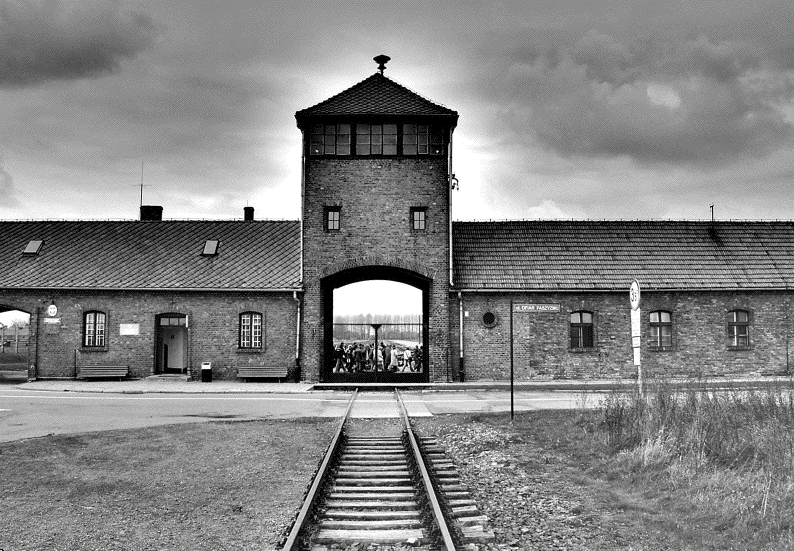
Photo of Auschwitz-Birkenau

Elie Wiesel and his family have arrived at Birkenau. We had an emotional ride to this spot in the book. Madame Schachter screamed for days about seeing a fire and a furnace. She was silenced, but after pulling up to Birkenau, the people in Wiesel's cattle car realized that she was all too correct. There was a fire. And a furnace. And a horrible stench that could only come from the burning of bodies. Mass cremation.

Because we're collecting belief statements for our Personal Creed Projects, today's prompt was about premonitions. Madame Schachter obviously had a very dark and foreboding premonition about fire. Not everyone believes in psychic ability, and some of you might have even experienced it firsthand.

We will continue learning about Elie's journey next class.